Most people are unaware that exposure to mold can cause serious illness. Even worse, most physicians are not familiar with mold illness or its symptoms, so it is rarely considered as a diagnosis. If mold is suspected, a physician may test the patient for mold allergies, or suggest they have allergies to some inhalant, but mold illness is much more. Symptoms of mold exposure are very similar to those of Lyme disease, and it is not uncommon for these conditions to occur simultaneously.
Someone can test positive for mold allergies and experience mold toxicity simultaneously. However, in mold toxicity, systemic immune dysregulation and subsequent inflammation are the underlying mechanisms driving symptoms.
Sources of Mold Exposure
Studies have estimated that more than half of the buildings in the United States have water damage and mold growth. The U.S. Environmental Protection Agency has surveyed 100 representative government and commercial office buildings and found that 45% had current leaks and 85% had evidence of past water damage.
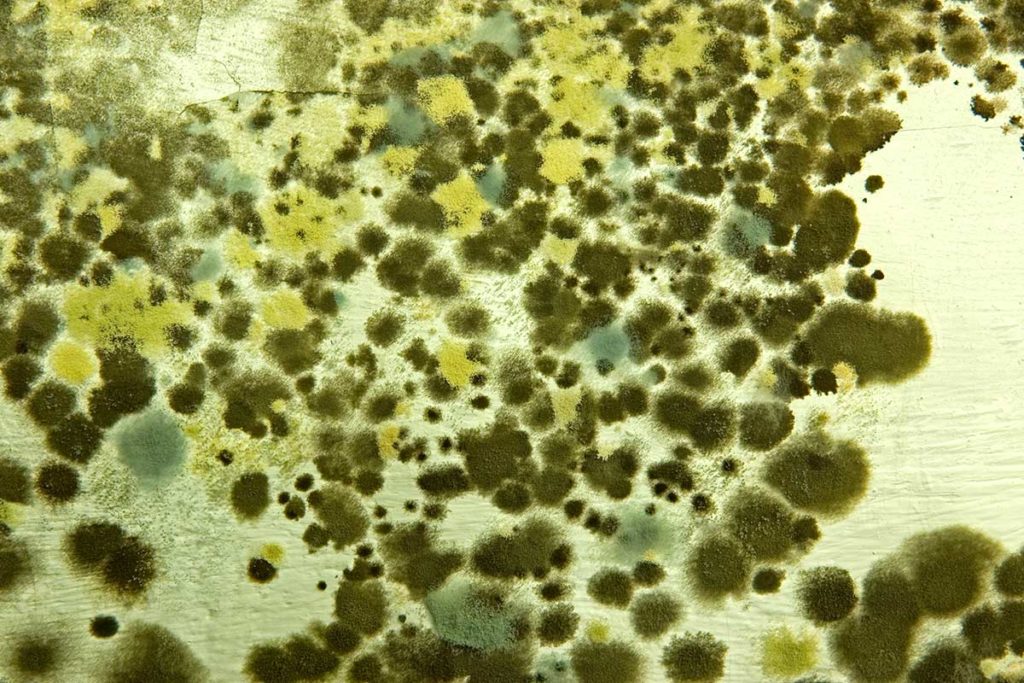
Within 48 hours of dampness or water intrusion, pathogens begin to grow. All that is needed for mold growth is dampness and a plant-based material, such as wood, paper, wallpaper, drywall, ceiling tiles, dust, and more. Mold growth will continue if there is moisture, which could be why some people’s symptoms worsen during the winter and spring. For mold remediation to be successful, it is critical to identify the source of water or moisture and effectively remediate the resulting water damage.
Molds produce toxins called mycotoxins. Mycotoxins can spread throughout the house like smoke does when something is burning on the stove.
Increased Risk for Mold Growth
Buildings with flat roofs or basements, or those built on hillsides or in shaded areas, are at increased risk of mold growth. HVAC systems are also a significant source of mold growth, especially when ducting is in a basement. In addition, water damage can come from a leaking roof, pipe, or appliance, such as a dishwasher, refrigerator, or washing machine. Poorly maintained buildings are much more susceptible to mold growth. Government buildings, schools, rental apartments, and rental homes tend to be poorly maintained.
There are also circumstances when water damage to a home or building is apparent. I have heard many remarkable stories over the years about mold being discovered in various locations in houses, condominiums, or apartments. Mold prefers darkness, so it rarely grows in the open where it is easily seen. I have also seen patients who were exposed to mold at work and in their cars.
Current and past mold exposure can cause illness. People can continue to have elevated mycotoxins from past mold exposure long after leaving a moldy environment.
However, most of the time, my patients are unaware they have been exposed to mold until they get tested. Once diagnosed with mold illness, people may recall a house they lived in years before their health declined that had a musty odor. How about the dorm where the college student lived, where the air conditioning unit was always on? When did their health decline?
Is All Mold Toxic?
Mold is not the only pathogen that grows from water damage. Fungal fragments, spores, mycotoxins, bacteria, mycobacteria, actinomycetes, VOCs, and other biotoxins can also form from water damage. These pathogens combine to produce a toxic soup that can lead to multisystemic, multisymptomatic illness.
Not all mold is toxic, but many mold species from water-damaged buildings produce mycotoxins. It is the indoor concentration of mycotoxins – and the rest of the toxic soup – that can contribute to chronic debilitating symptoms.
Mold Toxicity and Lyme Disease
Mold illness causes many of the same symptoms as Lyme disease. Both trigger systemic inflammation and immune dysregulation, leading to symptoms such as fatigue, brain fog, headaches, joint pain, and anxiety.
When tick-borne infections and mold toxicity occur together, the mold illness must be treated so the person can recover from the tick-borne infections. Mycotoxins suppress the immune system, making it difficult to treat Lyme disease and co-infections effectively.
Symptoms of Mold Exposure
The symptoms of mold exposure result from chronic inflammation, immune dysregulation, oxidative damage, and mitochondrial dysfunction, which adversely affect the structure and function of various organs and tissues throughout the body.
The symptoms of mold illness are:
- Psychiatric – anxiety, fear, panic attacks, mood swings, irritability, anger, OCD, reduced ability to cope with stress, hallucinations, and suicidal thoughts
- Cognitive – decreased short-term memory, difficulty concentrating, difficulty learning new information, word-finding difficulty, reduced ability to plan and execute, lack of motivation, brain fog, and Alzheimer’s dementia
- Musculoskeletal – muscle aches, sharp shooting pain, joint pain, morning stiffness
- Cardiovascular – palpitations, vasculitis, edema
- Fatigue and chronic fatigue syndrome
- Respiratory – shortness of breath, chronic cough, sinus infections, nasal drip
- Neurological – headaches, migraines, POTS/dysautonomia, tremors, vertigo, seizures, burning along the spine, sensitivity to light, sensitivity to touch, numbness and tingling, sense of internal vibration
- Digestive – abdominal pain, diarrhea, appetite swings, nausea, leaky gut syndrome
- Eye tearing and itching
- Multiple chemical sensitivity (MCS) and EMF sensitivity
- Mast Cell Activation Syndrome (MCAS)
People with mold illness are commonly misdiagnosed with chronic fatigue syndrome, autoimmune conditions, fibromyalgia, Alzheimer’s dementia, and respiratory disorders like asthma. Given the broad range of symptoms of mold exposure, you can see why many physicians miss this diagnosis unless they have had specialty training in mold-related illness.
Proper Testing for Mold Illness
Physicians specializing in mold illness have narrowed down the most effective tests to determine whether mold is an underlying cause of a person’s symptoms. Before considering laboratory tests, there is often a clinical suspicion that someone may be experiencing symptoms of mold exposure.
When someone is experiencing any of the above symptoms, mold-related illness should be considered. There is also the circumstance when someone has another diagnosis, such as Lyme disease, but treatments have been ineffective in resolving symptoms.
Urine Mycotoxin Test
A urine mycotoxin test indicates whether or not a person is excreting mycotoxins from mold exposure. However, our bodies should excrete mycotoxins after exposure to mold, and this does not necessarily mean someone has mold illness. The degree of mycotoxin elevation in the urine suggests the severity of mold toxicity.
The urine mycotoxin test I have found most accurate in my practice is Real Time Laboratory. To improve the accuracy of urine testing, intravenous glutathione should be administered the day before urine collection. If you do not have access to intravenous glutathione, oral liposomal glutathione for five days before collection is sufficient. Binders such as charcoal and clay must be discontinued for 5 days before collection.
Effective Treatment for Symptoms of Mold Exposure
Get Your Home Tested Properly
Proper mold inspection requires hiring an experienced Indoor Environmental Professional (IEP) who uses various testing techniques to ensure there has been no water damage that has led to mold growth in your home. When someone in the household is sick, the scope of mold testing needs to be more comprehensive than during a general home inspection. I have witnessed mold inspectors miss water damage and mold growth in patients’ homes because they did not thoroughly investigate or use the wrong testing methods.
Proper mold testing helps establish the scope of work (SOW) for remediation. It is a conflict of interest to hire an inspector who does remediation. However, most reputable inspectors can recommend a contractor who specializes in mold remediation.
The International Society for Environmentally Acquired Illness (ISEAI) has a database of IEPs with expertise in mold inspection. If you do not find an IEP near you on the ISEAI database, visit www.acac.org and look for CIEC and CMC certifications. You will also find certified remediators with CMRS and CMR designations.
Treatments for Mold Illness
Prescription medications and supplements – known as binders – are used to reduce the mycotoxin burden in the body. Technically, these compounds do not bind mycotoxins but adsorb like static cling. Mycotoxins are secreted with bile from the gallbladder into the intestines. Mycotoxins adhere to binders in the intestines and are then excreted in the stool.
Symptoms can flare when a binder mobilizes mycotoxins. Support detoxification pathways and reduce inflammation to minimize this reaction.
Natural binders, such as charcoal and clay, are effective at reducing mycotoxin levels, and prescription binders are rarely needed. Binder formulas work best (MycoBind is what my patients have had the best success with). Binders must be taken on an empty stomach at least 1 hour before or 2 hours after meals, other supplements, and medications. Extended-release medications – especially mood-stabilizing medications – require extra time.
Binders must be taken at least twice daily (once someone can tolerate that frequency). When taken at least twice daily, binders reduce the mycotoxin burden in tissues more effectively. Finding time to take binders on an empty stomach can be challenging, especially when taking other supplements and medications. Occasionally, my patients will take binders if they wake in the middle of the night.
Glutathione in Treating Mold Toxicity
Glutathione is a compound our bodies make and is a powerful antioxidant that supports immune system function and promotes detoxification. Mold exposure depletes glutathione and is one of the most effective compounds for removing mycotoxins.
Some people have variations in glutathione genes that interfere with glutathione production. These people tend to feel worse around toxicant exposures, which may play a role in why some people feel sick when exposed to mold, and others do not.
Glutathione can be administered intravenously or orally. If taken orally, it is essential to use a liposomal glutathione. A typical oral dose of liposomal glutathione is 450mg one to two times per day.
Reduce Inflammation in Mold Toxicity
Exposure to mold triggers chronic inflammation and oxidative damage in the body. In addition to removing mycotoxins with binders and through detoxification, the other critical steps are repairing the inflammatory response and oxidative damage.
Some therapies have been shown to reduce the inflammatory cytokines that increase in the presence of mycotoxins. Below are some treatments that have proven effective in my practice or shown success in research studies.
- Turmeric
- Berberine
- Resveratrol
- NAC
- Low-dose naltrexone (LDN)
- Phosphatidyl choline
- Green tea (EGCG)
Don’t Let Mold Interfere with Restoring Your Health
Mold is everywhere in the environment. Indoor exposure to toxic mold can trigger inflammation and immune dysregulation, leading to multiple symptoms across multiple body systems. This makes mold illness challenging to diagnose. Physicians rarely look for environmental causes of disease, so they do not ask patients about current or past exposures. If you are suffering from multiple chronic symptoms or have been diagnosed with a tickborne infection, mast cell activation syndrome, an autoimmune or neuroinflammatory condition, find a physician with expertise in mold illness so you can get properly tested.